Alejandro Montanez-Barrera
Institute for Advanced Simulation (IAS), Jülich Supercomputing Centre (JSC).

Gebäude 16.4
Raum 308a
Wilhelm-Johnen-Straße
52428 Jülich
Forschungszentrum Jülich
I am a postdoctoral researcher at the Jülich Supercomputing Centre (JSC) in Germany, working at the interface of quantum computing and high-performance computing. My research focuses on scalable methods for quantum optimization and quantum hardware benchmarking—especially protocols that reduce classical tuning overhead and enable fair cross-platform comparisons.
Highlights
- LR-QAOA validated on multiple platforms, including experiments up to 109 qubits (npj Quantum Information).
- Gate-based benchmarking at scale: evaluated 28 QPUs from 6 vendors, extending large-width analysis up to 156 qubits (among the most extensive cross-platform studies I’m aware of).
- Neutral-atom benchmarking: first side-by-side benchmark (to my knowledge) of commercial QPUs from QuEra and Pasqal.
Research interests
- Quantum optimization (QAOA, parameter schedules, transfer learning)
- Quantum hardware benchmarking (cross-platform, width/depth scaling)
- Neutral-atom quantum computing and scalable MIS benchmarks
- HPC-enabled simulation and validation of quantum protocols
A key result of my work is Linear-Ramp QAOA (LR-QAOA), showing that fixed parameter schedules can achieve high-quality solutions across diverse combinatorial optimization problems and serve as a practical depth-scaling benchmark. We validated LR-QAOA on multiple quantum processors, including experiments with up to 109 qubits, and published the results in npj Quantum Information. I also work on benchmarking and performance evaluation at large width and depth, including gate-based benchmarking across 28 QPUs from 6 vendors, extending the analysis up to 156 qubits. In neutral-atom computing, I helped deliver (to my knowledge) the first side-by-side benchmark of two different commercial QPUs—QuEra and Pasqal—at meaningful scale.
I’m also committed to open-source: I was an OpenQAOA SDK maintainer (2022–2024), supported by a Unitary Fund grant to simplify benchmarking of optimization problems in OpenQAOA (https://unitary.foundation/posts/2023_q1/), and I contribute to the broader quantum software ecosystem (e.g., Qiskit, PennyLane, D-Wave Ocean). I also added an LR-QAOA benchmarking protocol to Metriq-Gym (https://github.com/unitaryfoundation/metriq-gym). My work has been recognized with an additional Unitary Fund grant (see https://unitary.foundation/posts/2025_q1/) and multiple QHack/QDC competition awards.
I also developed a PennyLane tutorial on QUBO formulations for optimization: https://pennylane.ai/qml/demos/tutorial_QUBO
I hold a B.Sc. in electromechanical engineering (UPTC) and M.Sc./Ph.D. degrees in mechanical engineering from the University of Guanajuato (Ph.D. summa cum laude). With 16+ publications spanning quantum computing, optimization, and machine learning, this multidisciplinary background helps me translate theory into practical methods for near-term quantum systems.
Currently working on: scalable benchmarks and parameter-transfer methods for quantum optimization, with an emphasis on fair comparisons across hardware modalities.
Open to: research collaborations, invited talks, and open-source contributions in quantum optimization and benchmarking.
selected publications
-
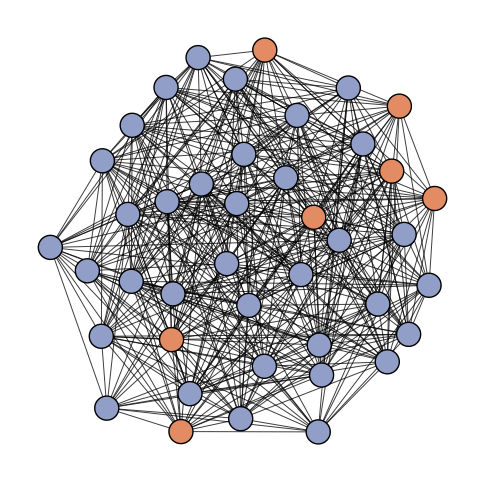 Towards a Linear-Ramp QAOA protocol: Evidence of a scaling advantage in solving some combinatorial optimization problemsnpj Quantum Information, 2025
 -
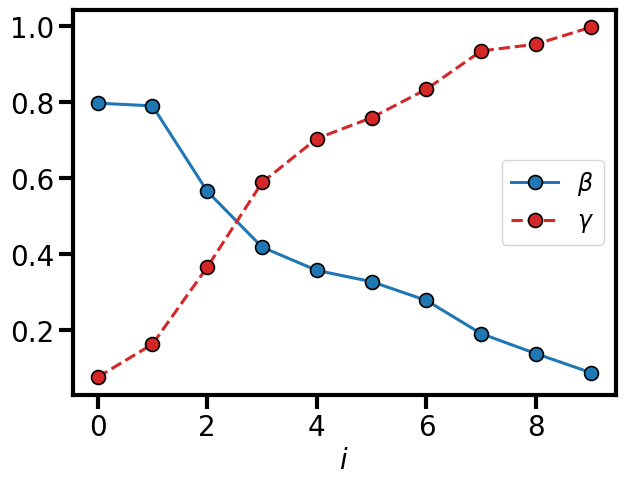 Transfer learning of optimal QAOA parameters in combinatorial optimizationQuantum Information Processing, 2025
 -
-
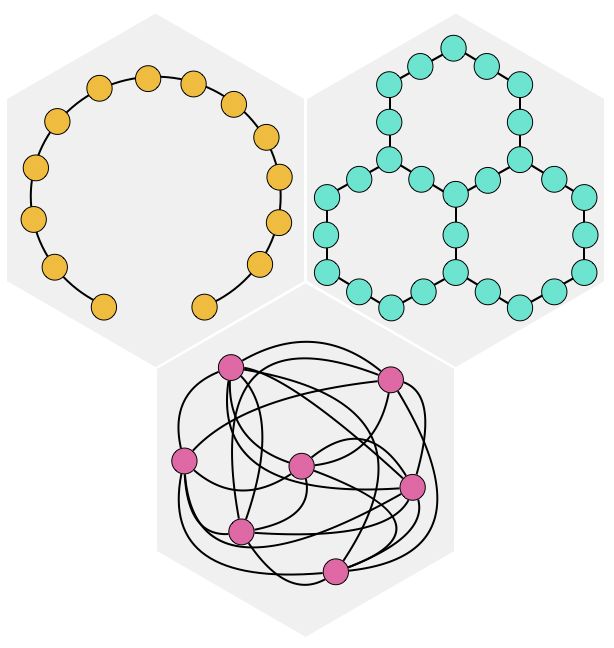 Evaluating the performance of quantum processing units at large width and depth2025Citations: 9
 -
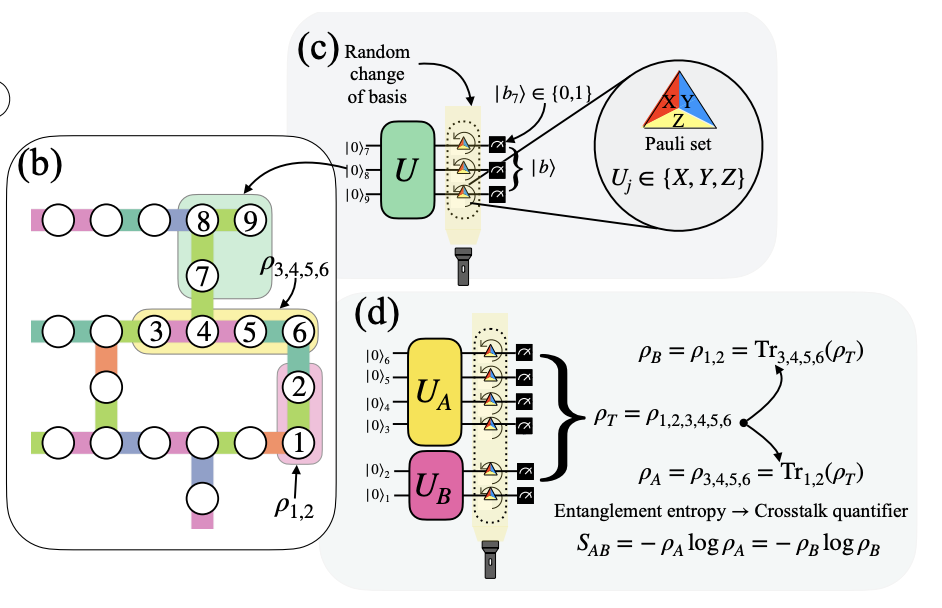 Diagnosing crosstalk in large-scale QPUs using zero-entropy classical shadowsQuantum Science and Technology, 2025
 -
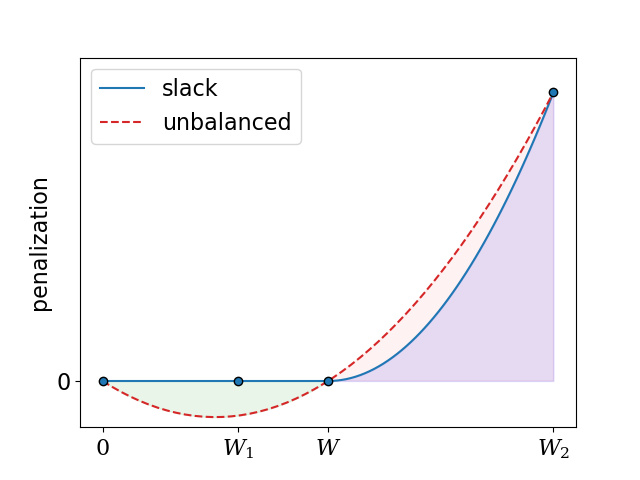 Unbalanced penalization: A new approach to encode inequality constraints of combinatorial problems for quantum optimization algorithmsQuantum Science and Technology, 2024Citations: 55


